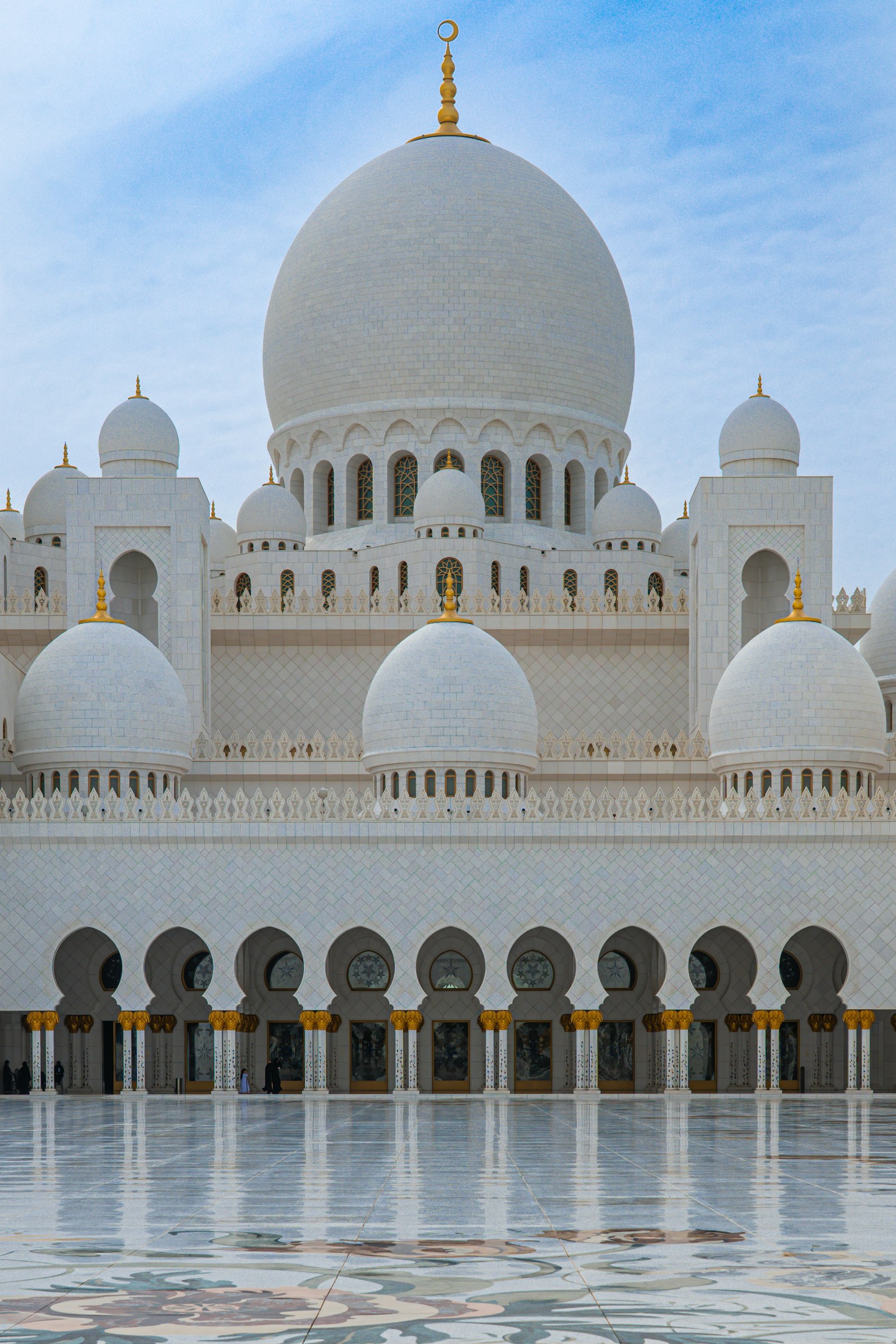
Abu Dhabi's defining landmark is a vision in white marble: 82 domes, four 107-metre minarets, the world's largest hand-knotted carpet, and reflective pools that mirror the whole facade. It is an active place of worship and a welcoming cultural bridge open to visitors of all backgrounds — and one of the most photogenic buildings on earth.
Planning your visit
Entry is free for everyone. General visiting hours run Saturday to Thursday from 9:00 am to around 9:00 pm, with last admission about half an hour before closing. On Fridays the mosque opens to visitors in the afternoon only, as the mornings are reserved for prayers. Hours shift during Ramadan and public holidays, so it is worth checking the official site before you go, and booking a free access pass online during busy seasons can save you queueing.
Insider tips
- Pre-book a free time slot online in peak season (Nov–Mar).
- Allow 1.5–2 hours to see it properly.
Dress code
Modest dress is required and enforced. Both men and women should wear long, loose, ankle-length clothing that covers the shoulders, arms, and knees — no tight, sheer, or sleeveless items. Women must also cover their hair with a headscarf. If you arrive without suitable attire, abayas and headscarves are provided free at the entrance, though bringing your own is easier. Shoes are removed before entering the carpeted prayer halls.
Best time & photography
Come late afternoon to catch golden hour on the marble, then stay as the sun sets and the facade lights up — the reflective pools make for unforgettable photos. Personal photography is welcome at designated spots; just be discreet around worshippers and avoid intimate poses out of respect.
Getting there
The mosque sits on Sheikh Rashid Bin Saeed Street, a short drive from downtown with free on-site parking. Taxis drop you right at the visitor entrance, and free guided walk-in tours (about 30–45 minutes) led by mosque specialists are a wonderful way to understand what you are seeing — arrive 15 minutes early to join one.